
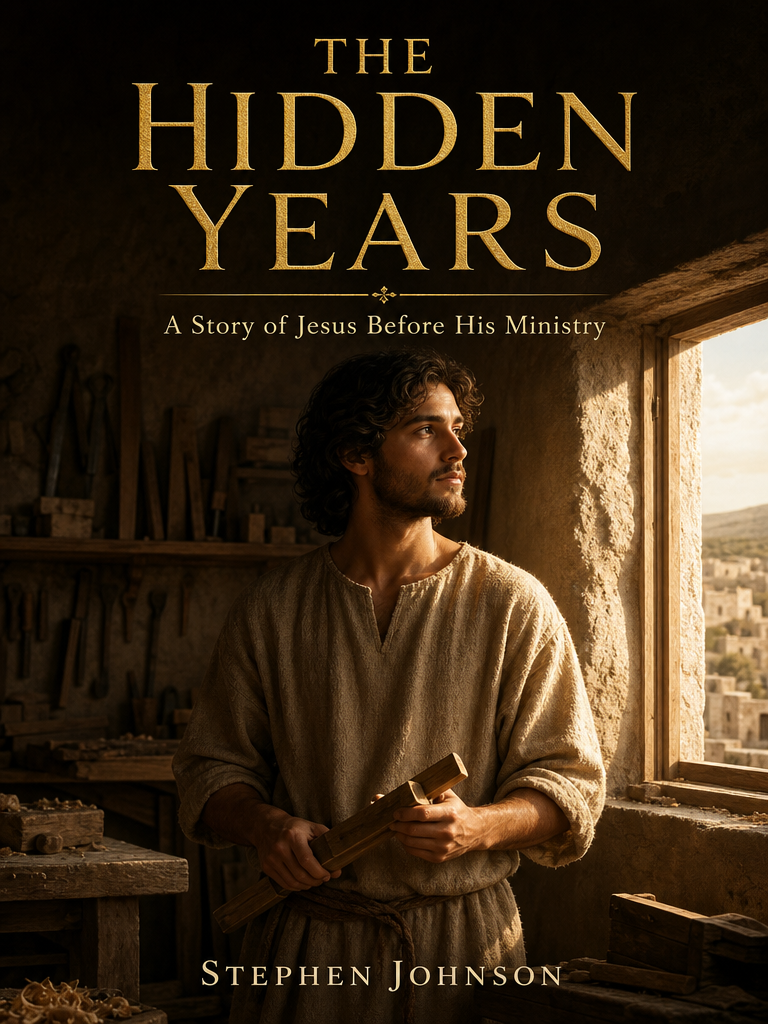
The Hidden Years imagines the untold story of Jesus of Nazareth during the most undocumented period of His life. Here is Jesus the carpenter, learning His trade at Joseph’s side, the grain of wood teaching Him patience and the weight of the hammer building strength in His hands.
Here is Jesus, the eldest son, navigating the complex dynamics of family life with brothers who cannot understand Him and a mother who alone knows the secret of His birth.
Here is Jesus the man, wrestling with temptation, grief, and the growing awareness of a divine calling that will demand everything.
Through historically grounded imagination and deep biblical fidelity, this novel explores how thirty years of hiddenness prepared Jesus for three years of revelation. It asks: What does it mean that God chose to spend most of His earthly life in obscurity, working with His hands, living among ordinary people, waiting for His time?
This biographical study examines the authors of scripture across both testaments, exploring the tension between faith tradition and scholarly consensus.
We must acknowledge from the outset that many biblical books are anonymous, pseudonymous or composite works, edited and redacted across centuries by communities rather than individuals.
The ancient Near Eastern concept of authorship differed fundamentally from our modern understanding; texts were living documents, subject to revision, expansion and reinterpretation by successive generations of scribes, priests and prophets.
There are questions we do not ask aloud.
What happened in those three days? What did Jesus encounter in the depths? And what does it mean that grace, not judgment, breaks the chains?
The Descent is a theological fiction. It reimagines Christ’s descent into hell. This event is not portrayed as punishment or condemnation. Instead, it is the culmination of redemption. Through Adam, Moses, David, and the forgotten faithful, readers descend with Jesus into the depths. There, captive souls have waited in darkness for centuries.
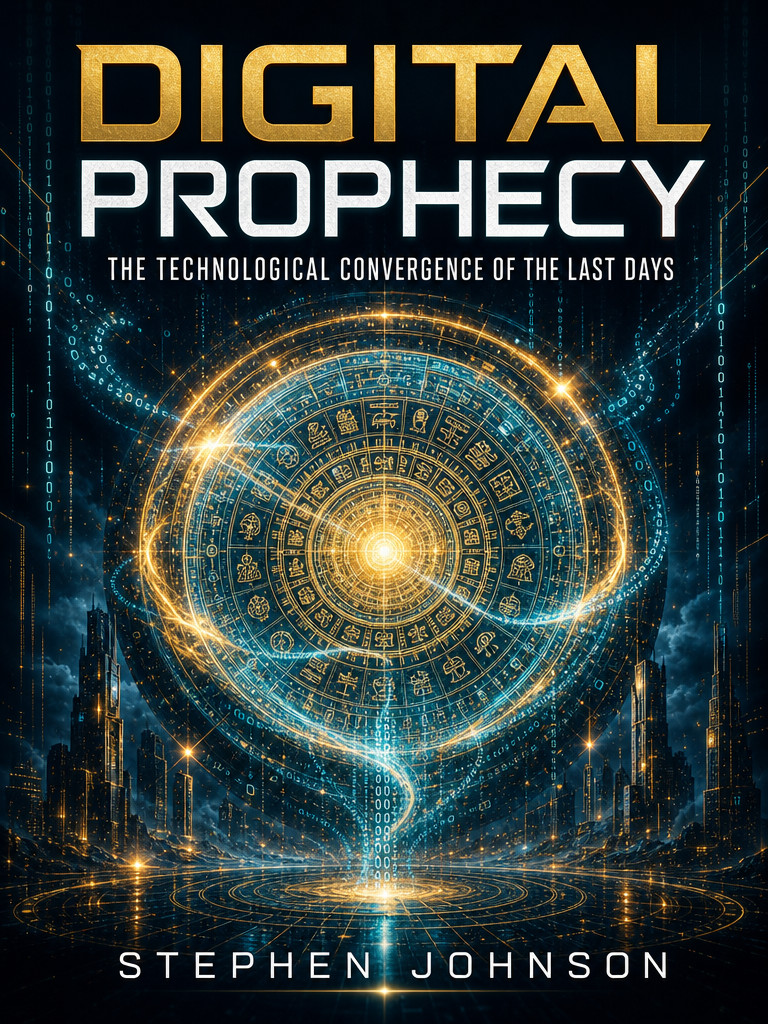
What happens when ancient prophecy meets artificial intelligence? This scholarly examination of biblical eschatology argues that twenty-first-century technology has, for the first time in history, created the conditions necessary to fulfil prophecies that previous generations could scarcely comprehend. From biometric identification systems to AI-generated deception, from digital currencies to global surveillance networks, the infrastructure described in Scripture’s end-times passages now exists as observable reality.
This is not sensationalism or newspaper exegesis, but a measured case built on a biblical foundation and contemporary observation. Whilst maintaining appropriate humility about precise timing, the author demonstrates why this generation’s unique combination of prophetic fulfilments demands the church’s attention, spiritual preparedness, and urgent faithfulness to the Great Commission.
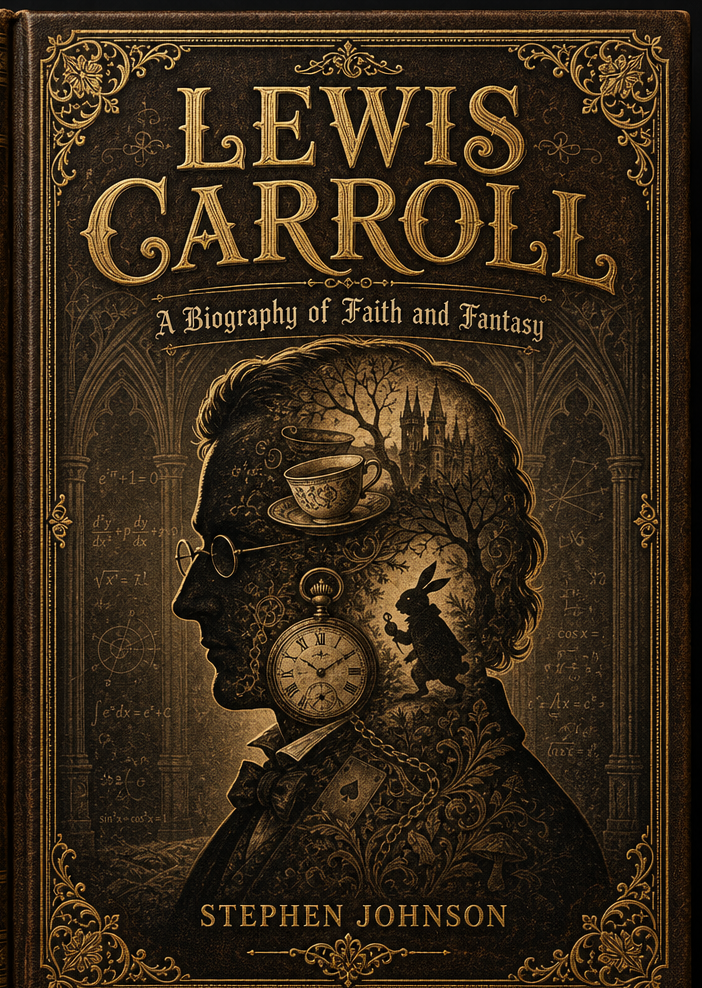
Charles Lutwidge Dodgson, known to the world as Lewis Carroll, was many things: a mathematician, a logician, a photographer, an author, and a friend to children. But above all, he was a Christian whose faith in Christ shaped every aspect of his life and work.
From his childhood in a clerical household to his final days, from his beloved Alice books to his lesser-known religious writings, faith provided the foundation and framework for his existence.
Understanding this dimension of Carroll’s life is not merely an academic exercise but essential to comprehending his full significance.
The Alice books are not just clever fantasies but imaginative explorations of Christian themes. The Hunting of the Snark is not merely nonsense but a meditation on the spiritual quest.
Sylvie and Bruno, far from being a failed experiment, represent Carroll’s most ambitious attempt to create explicitly Christian literature.
The New Testament presents a remarkable catalogue of supernatural events: the blind receive sight, the lame walk, demons flee at a word of command, storms obey a human voice, and the dead rise from their graves.
These miracles, performed by Jesus Christ and His apostles, stand as some of the most extraordinary claims in human history. They demand our careful attention, not merely as historical curiosities, but as theological realities with profound implications for the Church today.
This work undertakes two complementary tasks. First, it provides a comprehensive description of the miracles performed by Christ and the apostles as recorded in the New Testament Scriptures.
Second, it presents the theological case for cessationism: the doctrine that the apostolic sign gifts ceased with the end of the apostolic age and cannot be replicated today.
Cessationism represents a theological stance asserting that certain spiritual gifts ceased to be conferred to the church after the apostolic age.
Specifically, cessationists contend that the revelatory gifts, including apostleship, prophecy, word of knowledge, and word of wisdom, along with the sign gifts such as tongues, interpretation of tongues, miraculous healing, and miracles, were temporary provisions granted during the foundational period of the church and are no longer normatively bestowed today.
This understanding highlights a critical distinction in the nature and purpose of these spiritual gifts, as they were intended to serve specific functions during a unique era in church history.
We live in an age where lies travel faster than truth.
A MIT study found that false information spreads six times faster on social media than accurate information. Deepfake technology can now place anyone’s face on anyone’s body, saying anything.
Artificial intelligence can generate convincing articles, images, and videos in seconds. Meanwhile, trust in institutions, media, government, and even churches have plummeted to historic lows.
We’re drowning in information while starving for truth.
Yet this crisis isn’t new.